
Solar Versus Grid Costs for Floodlighting
Victor Gadamba
Author
Solar Versus Grid Costs for Floodlighting
Grid-Powered Floodlights (KPLC Tokens)
What happens when your floodlights run every night, all year? With Kenya Power and Lighting Company tokens at about 30 KSh per kWh, a 300W light quietly consumes power for 10–12 hours. Have you considered how much that adds up monthly—and how many lights you actually run?
- 3.6 kWh/day × 30 KSh ≈ 108 KSh/night
- ≈ 3,240 KSh/month
- ≈ 38,880 KSh/year (per light)
- 2 lights → ≈ 77,760 KSh/year
- 3 lights → ≈ 116,640 KSh/year
The True Cost of “Just One Light”
A single 300W floodlight running on tokens may not seem like much before you really do the calculations, but running nightly, it becomes a fixed cost. Now imagine two, three, or more lights. Does your security setup scale your visibility—or your electricity bill? And what happens as token prices rise over time?
- 1 light over 3 years → ≈ 116,640 KSh
- 2 lights over 3 years → ≈ 233,280 KSh
- 3 lights over 3 years → ≈ 349,920 KSh
- Compare that to a one-time alternative—at what point does “paying slowly” become more expensive?
Standalone Solar Floodlights
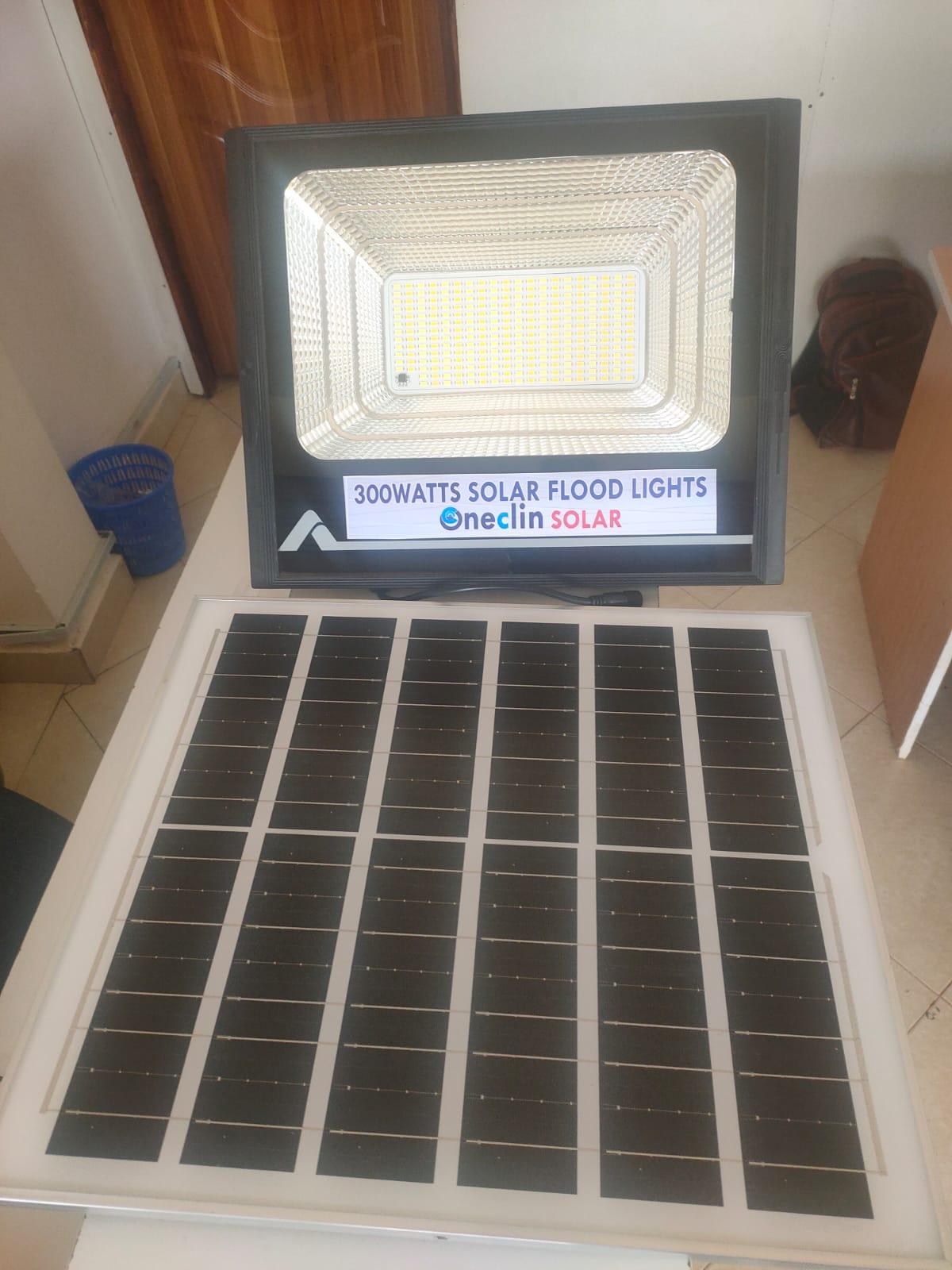
What if your floodlights didn’t depend on tokens at all? A 300W solar floodlight at 8,500 KSh or a 50W at 4,500 KSh shifts the cost upfront. No monthly billing. But is the brightness and runtime sufficient for your space? And how many units would you actually need?
- 1 × 300W solar floodlight → 8,500 KSh (once)
- 2 units → 17,000 KSh total
- 3 units → 25,500 KSh total
- Compare to grid: even 1 year of tokens (38,880 KSh) > cost of multiple solar units
Solar PV System (Whole Property Approach)
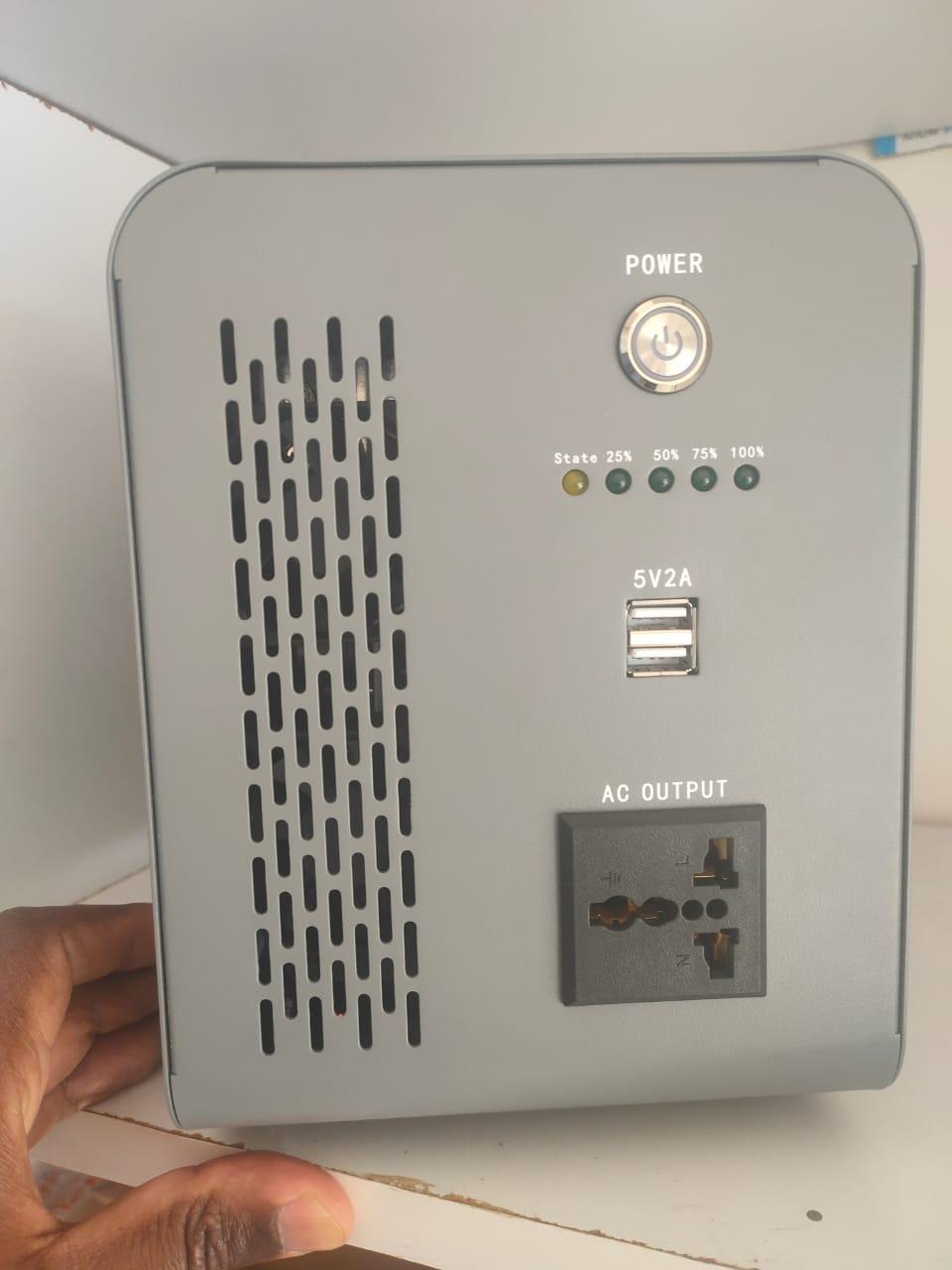
Now zoom out—what if lighting wasn’t the only thing you powered? A 3.3kW solar PV system with 5.12kWh battery storage (340,000 KSh) supports floodlights plus household loads like fridges, other lighting, blender, TV, sound system, and more. Therefore, sometimes it would make more sense to solve all energy needs by installing our 3.3kW package that comes with a 5.12kWh battery storage.
Choosing What You’re Really Paying For
Are you paying for light—or for convenience? Grid power spreads cost over time but never stops charging. Solar floodlights eliminate recurring costs but stay single-purpose. A solar PV system costs more upfront, but how much value do you place on independence and multi-use energy?
Quick Cost Prompts
- Grid (300W floodlight):
- ≈ 3,240 KSh/month per light
- Solar floodlights:
- 300W = 8,500 KSh once
- 50W = 4,500 KSh once
- Solar PV system:
- 300,000 KSh upfront
- Powers lighting + other loads
- Reduces or eliminates token spend over time
Related Articles
More from this category


Comments (0)
No comments yet. Be the first!
Leave a comment