
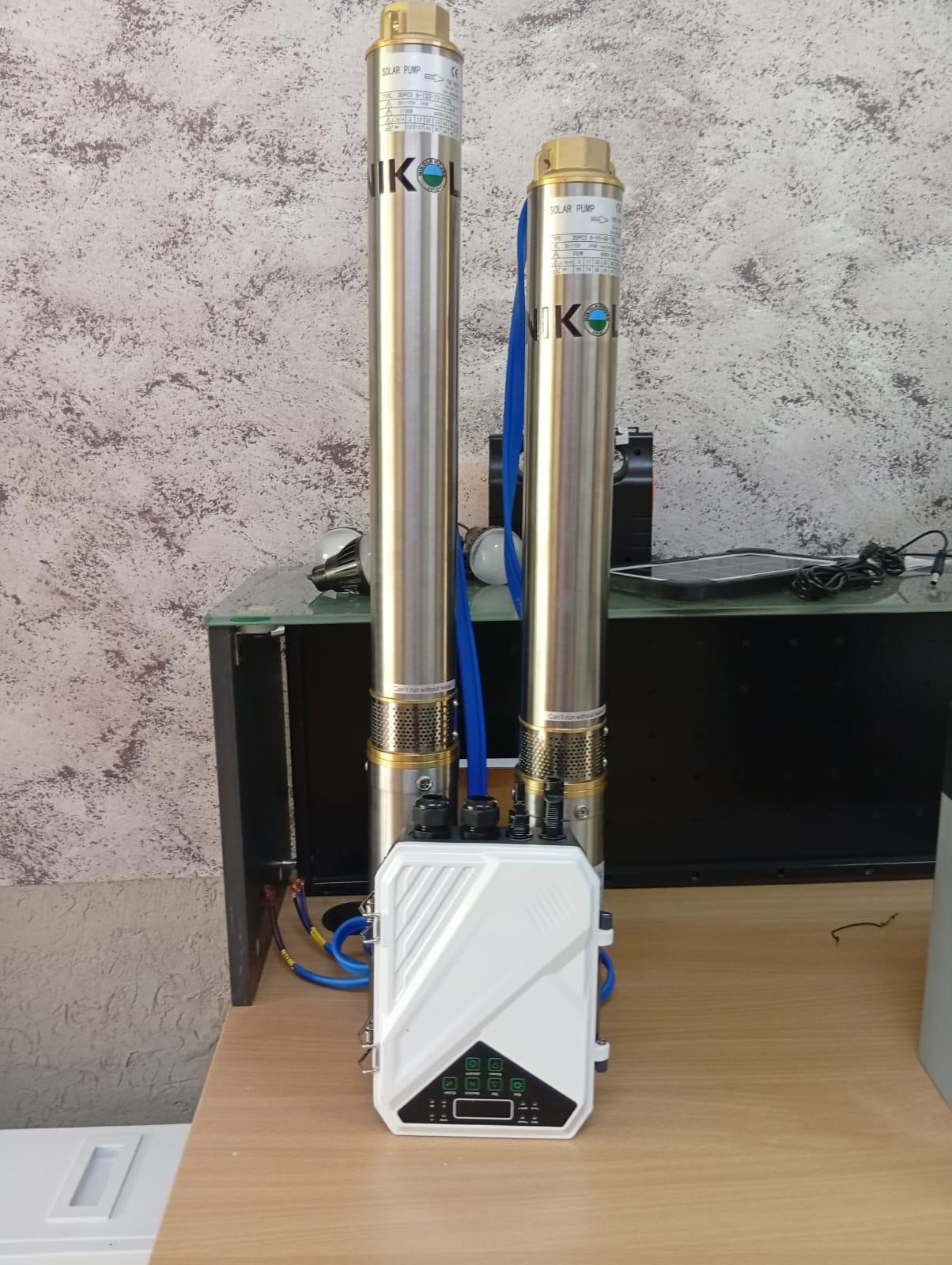
What are Differences Among Solar Pumps
Victor Gadamba
Author
1. Difference in Power Ratings
One major difference among solar pumps is their power rating. Solar pumps are available in sizes such as 200W, 400W, 750W, 1.5kW, and 2.2kW. Smaller pumps handle light domestic or small-scale farming tasks, while larger pumps support commercial irrigation and large water supply systems. Higher wattage pumps generate more power, allowing them to pump larger water volumes over longer distances and higher elevations.
2. Water Output Capacity
Different solar pumps deliver different amounts of water per hour. A smaller 200W pump is suitable for moderate water requirements like kitchen gardens or household supply. Larger pumps such as 750W or 1.5kW can deliver much higher flow rates for irrigation projects, fish farming, or livestock watering. The 2.2kW systems are designed for heavy-duty applications where large quantities of water are needed continuously throughout the day.
3. Pumping Depth Variations
Solar pumps also differ in how deep they can draw water. Low-powered pumps are ideal for shallow wells, rivers, and tanks. More powerful pumps can lift water from deep boreholes with greater efficiency. A 2.2kW solar pump can achieve a head of up to 180 meters, making it suitable for deep underground water extraction in areas with limited surface water sources.
4. Horizontal Water Delivery Distance
Another key difference is the horizontal distance water can travel. Smaller pumps are effective for short distances within homes or nearby farms. Larger solar pumps are engineered to transport water over long distances. High-capacity systems can push water horizontally up to 3 kilometers, making them ideal for large farms, ranches, institutions, and community water projects where the water source is far from the usage point.
5. Controller Technology Differences
Solar pumps use controllers to regulate voltage, current, and pump performance. Smaller systems often come with basic controllers that handle simple operations. Advanced solar pumps include intelligent controllers with features like dry-run protection, automatic start and stop, speed adjustment, and system monitoring. These advanced controllers improve efficiency, protect the pump from damage, and increase operational lifespan.
6. Surface Pumps vs Submersible Pumps
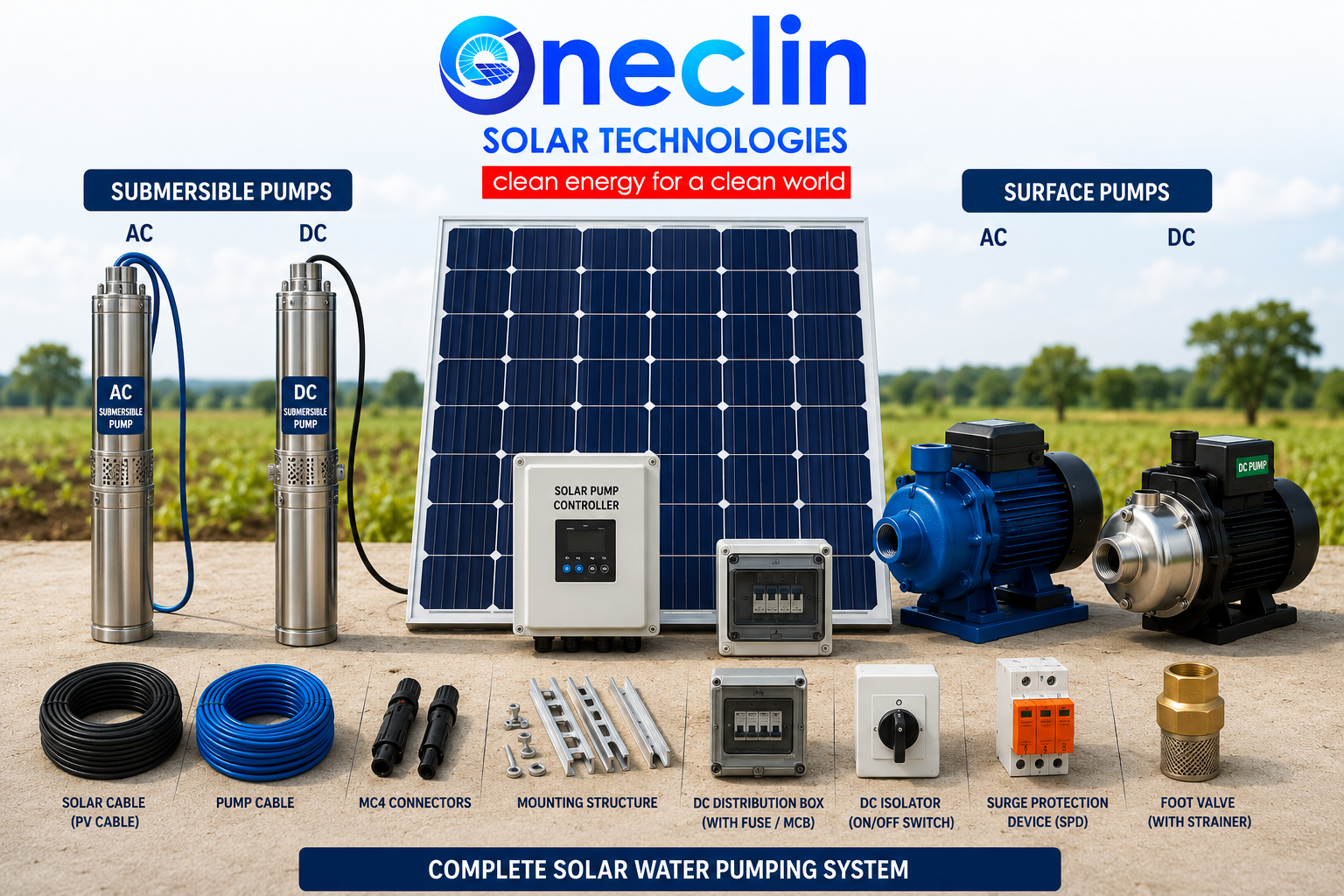
Solar pumps are generally classified as surface or submersible pumps. Surface pumps are installed above the water source and are suitable for shallow water applications such as rivers and ponds. Submersible pumps are placed inside boreholes or wells and push water upward. Larger systems, especially deep-well applications, commonly use submersible technology because it performs better in deep water conditions.
7. Differences in Water Pressure
Solar pumps produce different water pressure levels depending on their power and design. Lower-capacity pumps provide moderate pressure for domestic taps and drip irrigation. Larger pumps generate stronger pressure, allowing water to reach elevated tanks, sprinklers, or distant fields. High-pressure systems are important for commercial irrigation projects and multi-point water distribution systems.
8. Application in Agriculture
Agricultural use varies greatly among solar pump sizes. Small pumps are commonly used for vegetable gardens, greenhouses, and poultry farming. Medium-sized pumps support irrigation for several acres of crops. Large pumps such as 1.5kW and 2.2kW systems are ideal for extensive irrigation, dairy farms, and large agricultural operations where continuous water supply is essential.
9. Suitability for Domestic Use
For household applications, smaller solar pumps are often sufficient. They can supply water for cleaning, cooking, bathing, and small home gardens. Medium and large solar pumps are better suited for apartments, schools, hospitals, and institutions requiring higher daily water consumption. The choice depends on the number of users and the required water pressure.
10. Energy Consumption and Efficiency
Although all solar pumps use solar energy, their efficiency levels differ. Modern high-capacity pumps are designed with advanced motors that maximize water output while minimizing energy loss. Efficient systems maintain stable operation even during low sunlight conditions. Higher-powered pumps may require larger solar panel arrays, but they also deliver significantly greater performance for demanding applications.
11. Durability and Construction
Solar pumps are built differently depending on their intended use. Small domestic pumps may use lightweight materials for portability and convenience. Larger commercial pumps are constructed with stronger stainless steel components to withstand continuous operation, high pressure, and harsh environmental conditions. Durable construction is especially important for deep borehole and long-distance pumping systems.
12. Installation Requirements
Different solar pumps require different installation methods. Small pumps are easier and faster to install, often requiring fewer solar panels and accessories. Larger systems need more panels, stronger mounting structures, bigger cables, and professional installation. Deep borehole pumps also require proper pipe sizing and controller configuration to achieve maximum efficiency and reliable water delivery.
13. Choosing the Right Solar Pump
Selecting the correct solar pump depends on water demand, pumping depth, delivery distance, and intended application. Smaller pumps are suitable for homes and small farms, while larger systems support commercial agriculture and community water projects. Pumps ranging from 400W to 2.2kW provide solutions for different environments and operational needs. Understanding these differences helps users choose a system that delivers reliable and efficient water supply for many years.
```Related Articles
More from this category
Comments (0)
No comments yet. Be the first!
Leave a comment