
Solar for Home: How to Buy Solar for Your Home
Victor Gadamba
Author
Solar for Home: Complete Guide to Choosing the Right Size of Solar for Your Home

To buy solar for home, check the ratings on the appliances that you use and add up the appliance ratings to get your total load, then send their list and total load to your installer.
In this article, we will guide you on how to get the best, reliable, and sufficient solar for home or solar PV backup for home as your home solar power supply.
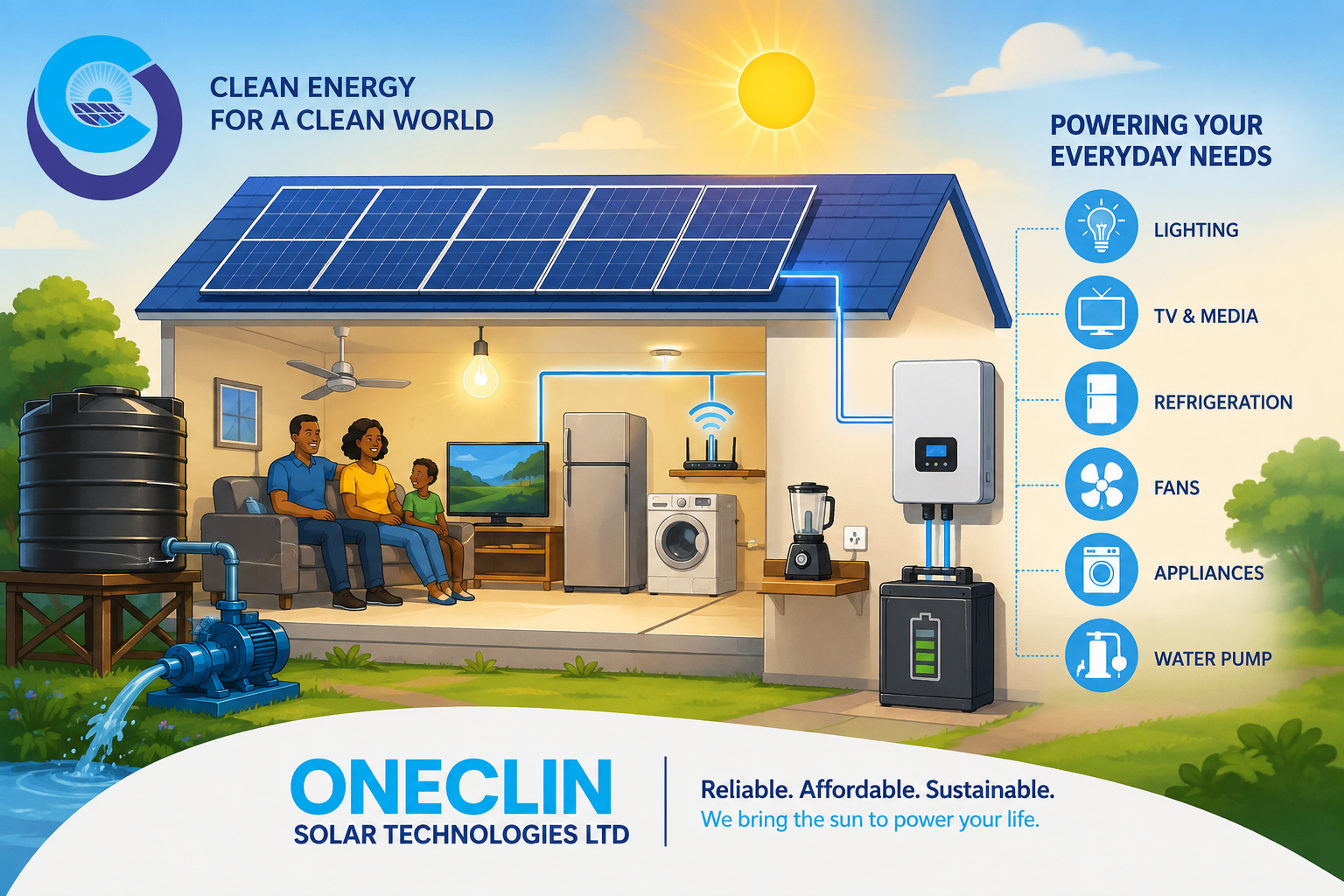
Most homes use electricity for TV, interior lighting, phone and laptop charging, fridges, washing machines, and small kitchen appliances. The size of solar PV systems needed for most homes typically ranges from 1.5kW to 3.3kW. Smaller households may operate below 1.5kW, while larger homes may require 5kW, 10kW, or even higher capacities.
How Do I Calculate Solar PV Size for My Home?
This is one of the most common questions homeowners ask. The goal is to determine your total daily energy consumption in watt-hours (Wh).
Step 1: List All Appliances and Their Power Ratings
Every electrical appliance has a label showing its rating in Watts (W) or kilowatts (kW).
1 kW = 1,000 Watts
Write down:
- Appliance name
- Power rating (W)
- Hours used per day
Step 2: Convert Usage Time to Hours
Minutes ÷ 60 = Hours
Example: A 700W blender used for 5 minutes:
5 ÷ 60 = 0.083 hours
If used 3 times per day:
0.083 × 3 = 0.25 hours per day
700W × 0.25 hrs = 175Wh per day
Step 3: Calculate Daily Energy Consumption
Power (W) × Hours Used = Watt-hours (Wh)
Interior Lighting Example:
- 6 bulbs
- 8W each
- 8 hours daily
6 × 8W × 8 hours = 384Wh
Washing Machine:
800W × 1 hour = 800Wh
Example Load for Family: This Family Needs a Solar PV System to Power their Blender, Washer, and Interior Lighting/Bulbs
| Appliance | Power (W) | Hours/Day | Daily Consumption (Wh) |
|---|---|---|---|
| Blender | 700W | 0.25 hrs | 175 Wh |
| 6 Bulbs | 8W each | 8 hrs | 384 Wh |
| Washing Machine | 800W | 1 hr | 800 Wh |
Step 4: Add Total Daily Energy
175Wh + 384Wh + 800Wh = 1,359Wh per day
You should send this total to your solar provider, i.e., the company selling you the solar for your home.
This total represents your total daily demand.
A professional solar PV system provider like OneClin Solar Technologies will do the rest of the calculations for you to determine the solar panel sizes and other aspects of the solar PV system that you need. The provider may request to visit your building or site to gauge the space for panel installation and verify your total load.
You may be interested to know how the solar provider knows the number of panels needed for the solar for your home. Let us explain this process here:
How Solar Panel Size is Determined
In Kenya, most areas receive approximately 5–6 peak sun hours per day.
Panel Size (W) = Total Daily Energy (Wh) ÷ Peak Sun Hours
1,359Wh ÷ 6 hours = 227W
Solar systems are not 100% efficient, so installers oversize panels by 30–40%.
227W × 1.4 = 318W
Practical minimum: 350W–400W of panels.
Including Battery Charging
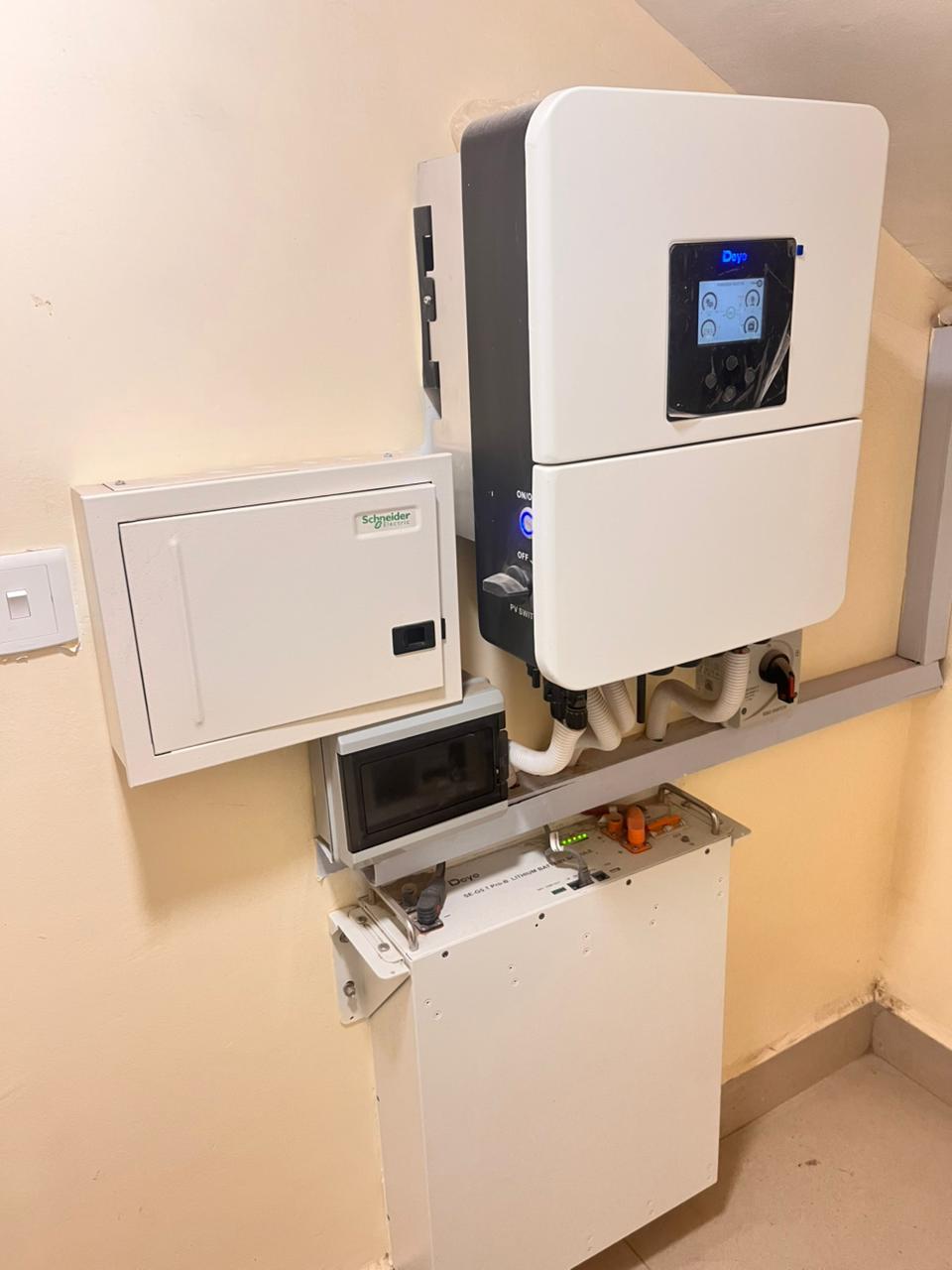
Assume you install a 2.56kWh (2,560Wh) lithium battery.
2,560Wh ÷ 6 peak sun hours = 427W
427W × 1.4 ≈ 600W minimum panel capacity
However, because panels must also power daytime appliances and account for cloudy weather, installers often size higher.
Practical Example:
4 panels × 450W = 1.8kW system
1.8kW × 6 hours = 10.8kWh daily production before losses.
This ensures:
- Full battery charging
- Daytime appliance use
- Reliability during cloudy weather
Why a 3.3kW Solar PV System Suits Most Homes
A 3.3kW solar PV system comfortably powers lighting, TV, fridge, washing machine, phone charging, laptops, and small kitchen appliances. For many average households, it balances affordability and performance without overspending.
It is large enough to power daytime loads while charging batteries for evening use. With proper installation and maintenance, the system can last over 20 years.
Do I Need a Small or Large Solar PV System?
800W – 1.5kW: Suitable for lighting, TV, phone charging, and small appliances.
3.3kW – 5kW: Ideal for medium homes running fridges, washing machines, microwaves, and moderate simultaneous loads.
6kVA – 8kVA inverters: Suitable for higher simultaneous appliance usage.
Solar inverters operate at a power factor of about 0.8:
1 kVA ≈ 0.8 kW
1 kW ≈ 1.25 kVA
Example: A 5kVA inverter ≈ 4kW usable power.
10kW – 20kW systems: Suitable for large homes with air conditioners, pumps, and heavy usage.
30kW+ systems: Ideal for mansions, farms, schools, or commercial buildings.
Where to Get the Right Solar for Home in Kenya
OneClin Solar Technologies is a trusted company selling and installing solar PV systems for homes across Kenya and Africa. The company is run by qualified engineers and technicians who survey sites and provide professional system sizing advice.
Location: Visit us at Venus Complex, Along Northern Bypass, Nairobi.
Calls and Whatsapp: 0724044962
Emails: oneclinsolar@gmail.com
Related Articles
More from this category
.png)
Comments (2)
No comments yet. Be the first!
Leave a comment