
Identifying Solar Solutions that Fit You
Victor Gadamba
Author
FIRST PRIORITY: YOUR LOAD
The top priority in identifying a suitable solar solution for your home, business, or institution is knowing the amount of power that solar can provide for you.
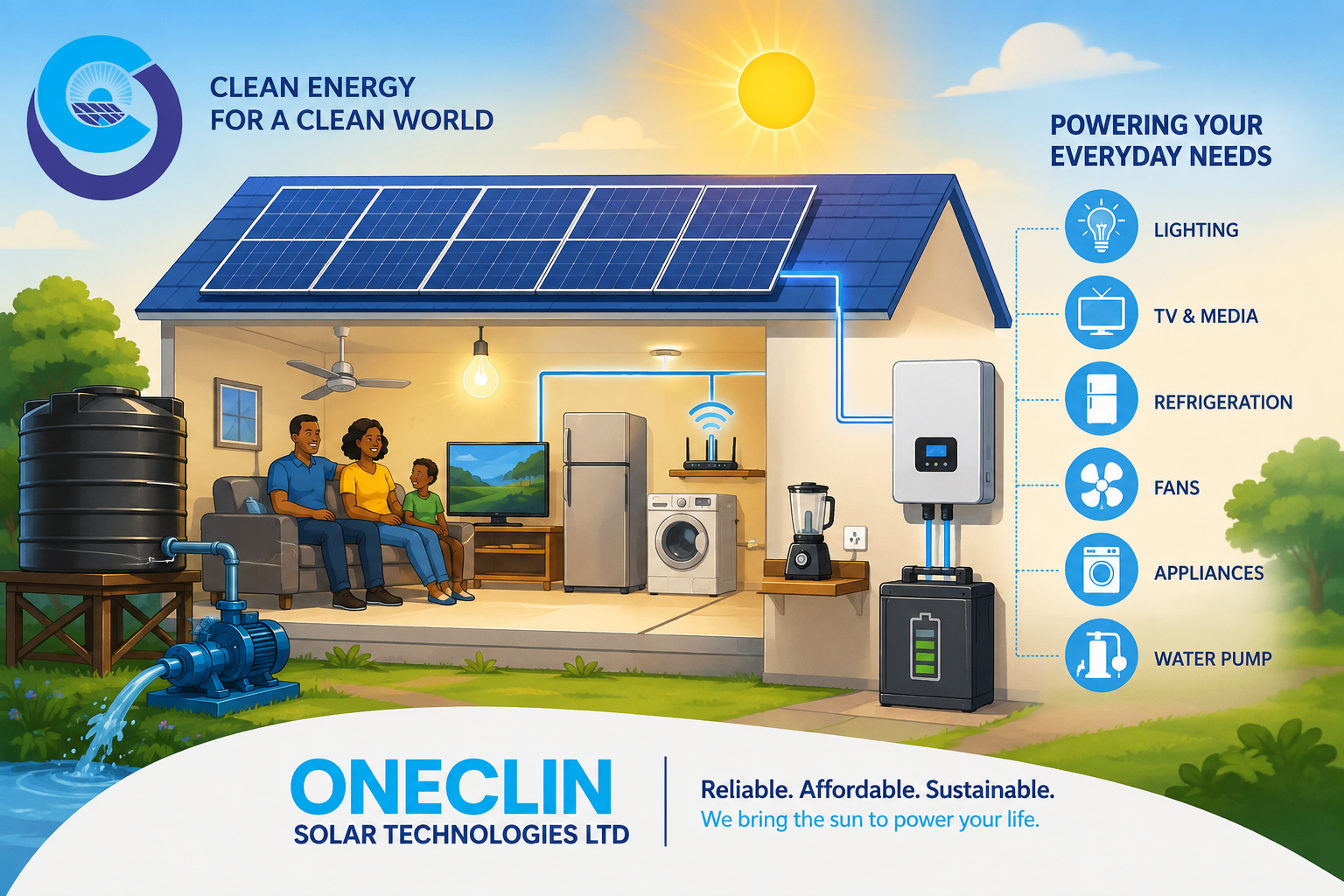
Solar is excellent for powering all types of lighting, media and audiovisual devices (such as TVs, audio amplifiers, laptops, desktop computers, phones, and networking equipment), most household appliances such as washing machines, blenders, refrigerators, freezers, and microwaves.
It can also power other kitchen equipment (excluding high-power heating appliances such as electric ovens, cookers, kettles, and water heaters in most cases), as well as many other electrical and electronic devices.
In most cases, the individual power ratings of each item should be substantially below 10 kW.
STEP 1: DETERMINE YOUR ELECTRICAL LOAD
The first step is to determine your electrical load. You do this by reading the power rating of each appliance. Most items have a power rating sticker on them or stamp. For each item, also estimate the number of hours it will be used each day. After noting that down, also note down which appliances are likely to operate simultaneously (at the same time).
The first step is to determine your electrical load. You do this by reading the power rating of each appliance. Most items have a power rating sticker or printed label indicating their rated power consumption. For each appliance, estimate the number of hours (or minutes) it is used during a single use and how many times it is used each day. Finally, identify which appliances are likely to operate simultaneously (at the same time), since this determines the peak power your inverter must be able to supply.
| Item | Power Rating | Hours/Minutes Used in a Single Use | Number of Times Used in a Day |
|---|---|---|---|
| LED Bulb | 10 W | 6 Hours | 1 |
| Television | 120 W | 3 Hours | 1 |
| Refrigerator | 150 W | 24 Hours (Cycles On/Off) | Continuous |
| Laptop Computer | 65 W | 4 Hours | 1 |
| Blender | 800 W | 5 Minutes | 2 |
| Water Pump | 750 W | 30 Minutes | 2 |
| Items Used Together | Power Rating |
|---|---|
| Television | 120 W |
| Refrigerator | 150 W |
| LED Bulb | 10 W |
| Total Simultaneous Load | 280 W |
| Maximum Running Load (All 6 Items Running Together) | Recommended Solar Panel Capacity | Recommended Inverter Rating |
|---|---|---|
|
LED Bulb (10 W) + Television (120 W) + Refrigerator (150 W) + Laptop (65 W) + Blender (800 W) + Water Pump (750 W) Total = 1,895 W (≈1.9 kW) |
3.3 kWp (6 × 550 W solar panels) |
3 kW Hybrid Inverter |
WHAT CAN A TYPICAL SOLAR PV SYSTEM POWER?
For most households and small businesses, an affordable yet capable solar PV system typically uses an inverter rated between 3 kW and 10 kW, supported by 5–20 kWh of battery storage depending on the desired backup time. Such systems can comfortably power the majority of everyday electrical appliances, including:
- LED lighting: 5–20 W per bulb
- Televisions: 50–250 W
- Audio amplifiers and home entertainment systems: 50–500 W
- Laptop computers: 45–120 W
- Desktop computers: 150–400 W
- Wi-Fi routers and networking equipment: 10–30 W
- Mobile phone chargers: 5–30 W
- Refrigerators and freezers: 80–300 W (with higher startup surge currents)
- Ceiling and pedestal fans: 30–100 W
- Washing machines: 400–1,000 W
- Blenders and food processors: 300–1,200 W
- Microwave ovens: 800–1,500 W (typically used for short durations)
- Water pumps: 250 W–2.2 kW depending on the application
- Office equipment, CCTV systems, printers, and similar electronics: typically below 500 W each
These appliances represent the vast majority of electrical loads found in modern homes, offices, schools, hospitals, shops, hotels, and many commercial premises. With a properly designed solar PV system, they can be operated efficiently while providing reliable daytime power and battery backup during grid outages.
APPLIANCES THAT REQUIRE LARGER SOLAR SYSTEMS
High-power resistive heating appliances consume considerably more electricity and place a much greater demand on the solar system. These include:
- Electric kettles: 1.5–3.0 kW
- Electric irons: 1.0–2.2 kW
- Electric ovens: 2–5 kW
- Electric cookers and hot plates: 1.5–6 kW
- Instant water heaters and electric showers: 3–9 kW
- Space heaters: 1–3 kW
- Electric geysers: 2–4.5 kW
Although these appliances can be powered by solar, they require substantially larger inverters, more solar panels, and greater battery storage than a typical residential system. The required system depends on how many of these appliances are used simultaneously and for how long.
As a practical guide:
- A home that occasionally uses one kettle, one iron, or a microwave while running normal household appliances should typically consider a 6–8 kW inverter, 10–15 kWh battery storage, and approximately 6–8 kWp of solar panels (roughly 11–15 panels rated at 550 W each).
- A home that intends to run an electric cooker or oven, together with other household appliances during the day, should typically consider an 8–10 kW inverter, 15–20 kWh battery storage, and approximately 8–10 kWp of solar panels (roughly 15–18 panels rated at 550 W each).
- Homes, institutions, or businesses that rely heavily on electric cooking, water heating, multiple air conditioners, or several high-power appliances operating simultaneously should generally consider systems of 10–15 kW (or larger), with 20–40 kWh or more of battery storage and approximately 10–18 kWp of solar panels (about 18–33 panels rated at 550 W each). Such installations are usually custom-engineered to match the site's electrical demand.
For many homeowners, a more economical approach is to use solar PV for lighting, electronics, refrigeration, water pumping, and other everyday loads while using LPG, biogas, solar water heaters, or heat pump water heaters for cooking and water heating. This significantly reduces the required size and cost of the solar PV system while still delivering substantial savings on electricity.
SELECTING THE RIGHT SOLAR SOLUTION
Once you have identified your electrical load, choosing the right solar system becomes much easier. A practical rule is to size the system according to the appliances you want to power, both now and in the near future.
- If you only need to power essential loads such as lighting, TVs, Wi-Fi, phone chargers, laptops, and a refrigerator, a 3 kW inverter with 5–10 kWh of battery storage and approximately 2.5–3.5 kWp of solar panels (5–6 × 550 W panels) is usually sufficient.
- If you require power for an average household or small business, including multiple lights, several TVs, refrigerators, computers, CCTV, a washing machine, and a small water pump, a 5–6 kW inverter with 10–15 kWh of battery storage and approximately 5–6 kWp of solar panels (9–11 × 550 W panels) is generally recommended.
- If you are powering a large home, institution, or business with multiple offices, several refrigerators, larger water pumps, or many appliances operating simultaneously, consider an 8–10 kW inverter with 15–20 kWh of battery storage and approximately 8–10 kWp of solar panels (15–18 × 550 W panels).
A SIMPLE RULE OF THUMB
As a general guide, every 1 kWp of installed solar panels can generate approximately 4–5 kWh of electricity per day under good sunshine conditions. Therefore:
- 10 kWh/day consumption requires approximately 2.5–3 kWp of solar panels (5–6 × 550 W panels).
- 20 kWh/day consumption requires approximately 5 kWp of solar panels (9–10 × 550 W panels).
- 30 kWh/day consumption requires approximately 7.5 kWp of solar panels (14 × 550 W panels).
- 40 kWh/day consumption requires approximately 10 kWp of solar panels (18 × 550 W panels).
These estimates assume good solar irradiation and are intended for preliminary planning. Actual system sizes may vary depending on geographical location, roof orientation, seasonal weather, battery charging requirements, and desired backup duration.
Finally, it is advisable to design your system with 20–30% spare capacity. This allows room for additional appliances in the future, improves battery charging performance, and ensures that the inverter and battery system are not continuously operated at their maximum capacity, resulting in better efficiency, reliability, and longer equipment life.
Call Us: 0710422071
Related Articles
More from this category
.png)
Comments (0)
No comments yet. Be the first!
Leave a comment